👗 Fashion
The ultimate guide to vegan leather
From cactus to cork: materials, care, brands and the honest sustainability ranking.
Quick summary
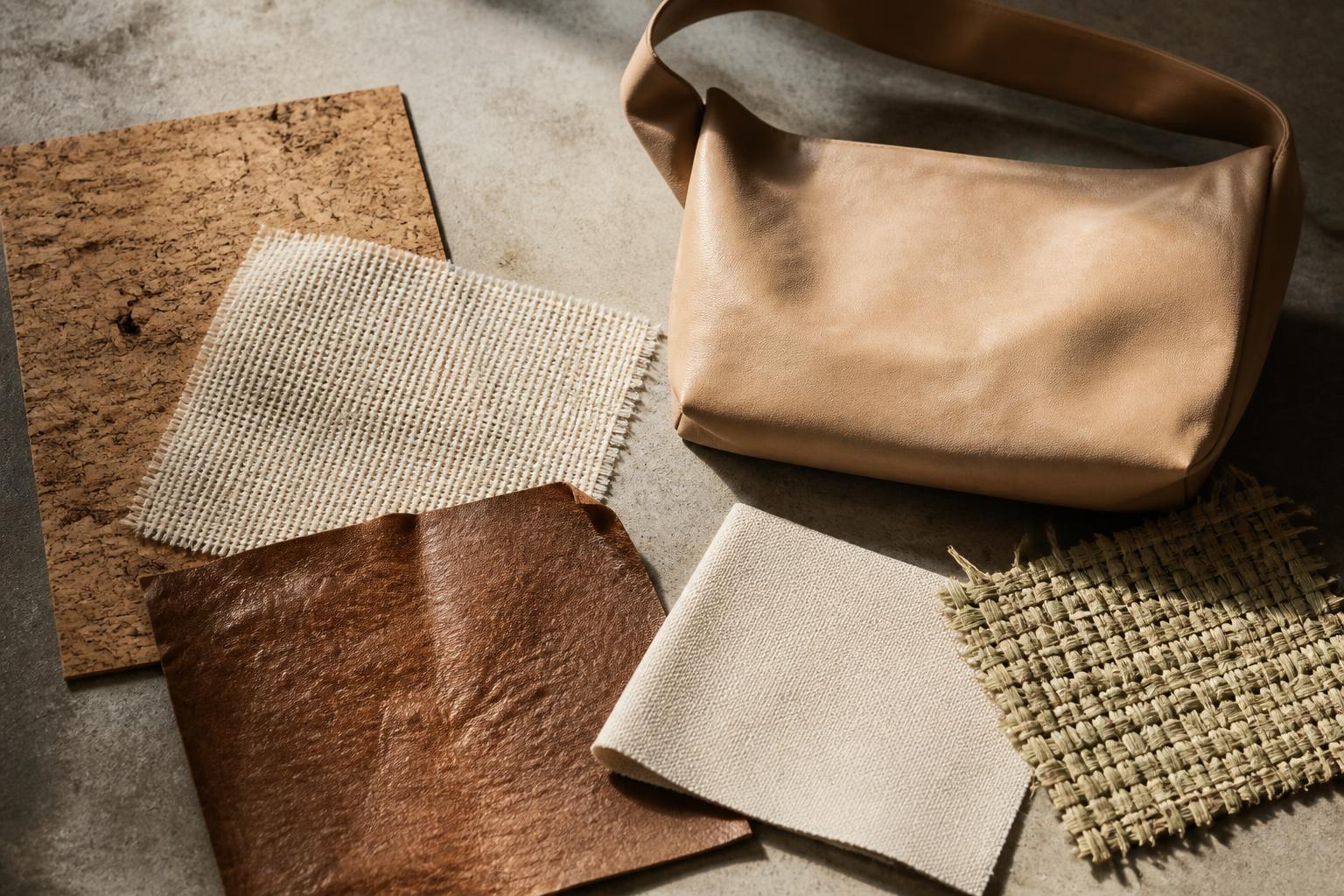
Vegan leather used to mean PVC "pleather." Today, it includes traditional plastic-based alternatives like PU (polyurethane) as well as a growing range of plant-based materials made from cactus, apple waste, pineapple leaves, mushrooms, cork and more. Most commercially available plant-based leathers are hybrid materials that combine plant fibres with PU or other binders to improve strength, flexibility and durability.
The current options
| Material | Source | Best for | Notes |
|---|---|---|---|
| Cactus leather (Desserto) | Nopal cactus + bio-based polymer | Bags, jackets, shoes | One of the most widely available plant-based leathers. Soft, durable and premium. |
| Mushroom leather (Mycelium) | Mycelium (mushroom roots) | Bags, footwear | One of the closest alternatives to animal leather in look and feel. Still scaling commercially. |
| Apple leather | Apple waste from the juice industry | Bags, shoes, watch straps | Gives agricultural waste a second life and has a smooth leather-like finish. |
| Piñatex | Pineapple leaf fibres | Shoes, bags, jackets | One of the first commercially successful plant-based leather alternatives. |
| Cork leather | Cork oak bark | Bags, wallets, footwear | Renewable, lightweight and naturally water-resistant. Harvesting cork does not harm the tree. |
| Recycled rubber | Recycled tyres | Shoes, sandals | Extremely durable and helps divert waste from landfill. |
| PU (Polyurethane) | Petroleum-based | Bags, shoes, furniture | Plastic-based, but generally considered less environmentally harmful than PVC. Durable and widely used. |
| PVC (Polyvinyl chloride) | Petroleum-based | Cheap pleather | Still found in inexpensive products but increasingly avoided due to its environmental impact. |
| Washable kraft paper | Wood pulp | Tote bags, wallets | Lightweight, surprisingly durable and recyclable in many cases. |
Care notes
Cactus, mushroom, apple and Piñatex
- Wipe clean with a damp cloth.
- Avoid soaking in water.
- Store away from prolonged direct sunlight.
- Most products have a protective PU coating.
Cork
- Naturally water-resistant.
- Simply wipe clean with a damp cloth.
- No leather conditioner required.
PU
- Avoid excessive heat.
- Don't iron.
- Store away from prolonged direct sunlight to reduce cracking over time.
Where to buy
Bags & Accessories
- Studio Beej (cork, cactus)
- Arture (cork)
- Matt & Nat
- Stella McCartney
Shoes
- Paaduks
- Will's Vegan Shoes
- Veja (vegan collection)
- Bourgeois Boheme
- FAAE
- The Alternate
Belts & Wallets
- Arture
- Studio Beej
- Brown Living (marketplace with multiple vegan brands)
Jackets
- Will's Vegan Shoes
- Stella McCartney
- Selected H&M collections (check material composition carefully)
Indian vegan brands using alternative materials
- Studio Beej
- Arture
- Malai Eco (coconut leather)
- Paaduks
- Zouk
- Miri
- Pine & Drew
- Sarjaa
- The Gusto
- Aulive
International pioneers
- Stella McCartney
- Matt & Nat
- Will's Vegan Shoes
- Bourgeois Boheme
- Veja (vegan collection)
- Desserto (cactus leather innovator)
- Piñatex (pineapple leather innovator)
The honest sustainability ranking
If you care about both animals and the planet:
Second-hand products > New vegan leather > New conventional leather
Within vegan leather:
Plant-based leathers with lower plastic content > PU leather > PVC leather
And regardless of the material:
Repair what you own before replacing it. Buying less and using products for longer has one of the biggest environmental benefits.
Things to look for before buying
- Check whether the product is actually vegan.
- Look for brands that disclose the percentage of plant content.
- Remember that higher plant content generally means less plastic, but durability also matters.
- Look for recycled linings, recycled hardware and transparent supply chains.
- Prioritise quality over quantity.
Common myths
"Plant leather is plastic-free." Not usually. Most commercial plant-based leathers contain PU or another binder to improve durability.
"Vegan leather always falls apart." Not anymore. High-quality PU and modern plant-based materials can last for many years when properly cared for.
"Real leather is a natural by-product." Leather production is resource-intensive and relies on energy-intensive tanning processes. It also contributes to the environmental impacts associated with animal agriculture.
References
Written by Malavika Malaviya. Last updated 15 June 2026. Found something out of date? Tell us.