🍛 Food & Nutrition
The vegan Indian kitchen
A full walk-through of eating vegan in India - kitchen to thali to grocery run.
The Indian advantage
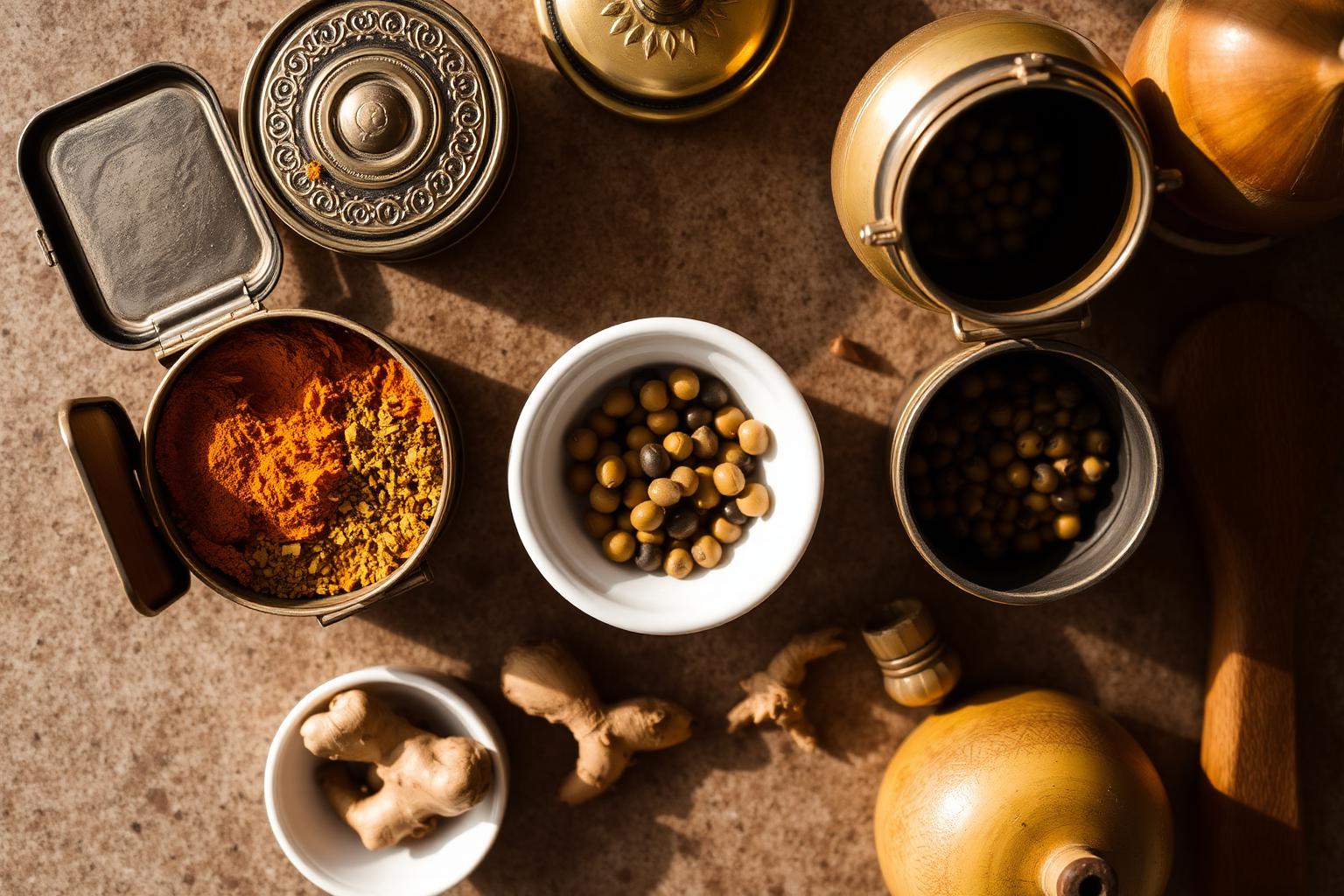
Many Indian cuisines are among the most vegan-friendly in the world. In most homes, the foundation of a meal is already plant-based - grains, lentils, legumes, vegetables and spices. For many people, going vegan isn't about learning an entirely new way of cooking. It's simply about replacing dairy staples like milk, ghee, paneer and curd. Once your pantry is stocked, everyday cooking changes surprisingly little.
Build your pantry
A single well-stocked pantry supports most of a week's cooking.
| Category | Stock |
|---|---|
| Grains | Atta, basmati rice, rolled oats, one millet (foxtail or ragi), poha |
| Dals | Toor, moong, masoor, urad; one mixed dal pack |
| Legumes | Kala chana, kabuli chana, rajma, lobia, black-eyed peas |
| High-protein staples | Soya chunks, firm tofu, vital wheat gluten (for seitan), TVP (textured vegetable protein, if available), peanut butter, hemp seeds |
| Fats | Cold-pressed groundnut oil, mustard oil, olive oil, vegan ghee |
| Plant milk | One litre of oat or soy milk |
| Flavour | Tamarind, jaggery, kasuri methi, nutritional yeast, soy sauce, vinegar |
| Spices | Standard masala dabba with cumin, mustard, hing and garam masala |
Breakfast
Most Indian breakfasts are either already vegan or require a single substitution.
- Already vegan: idli, sambar, plain dosa (without ghee), upma, poha, chilla, sabudana khichdi, aloo paratha (without butter), thepla, dhokla, besan chilla, moong dal chilla, vegetable uttapam.
- One substitution: chai with oat milk; oats with plant milk, banana and peanut butter; paratha with vegan ghee.
- Additions worth trying: tofu bhurji, savoury oats with vegetables, or a smoothie of banana, oat milk, peanut butter and dates.
Lunch: the thali
The standard thali - dal, sabzi, rice, roti and salad - is already an efficient vegan meal. Two adjustments make it fully plant-based:
- Substitute soy or coconut curd for dairy curd, or omit.
- Substitute vegan ghee, or omit, when finishing roti.
Easy protein additions
A lot of new vegans don't realise they can simply add protein to an existing meal instead of reinventing it.
- Tofu
- Soy chunks
- Chana
- Rajma
- Sprouts
Dinner
The pattern is one protein-forward dish and one substantial vegetable.
- Tofu bhurji with roti
- Rajma chawal
- Chickpea and coconut curry with rice
- Soya chunk biryani
- Chole bhature (without butter)
- Dal makhani (vegan version)
- Palak tofu
- Baingan bharta
- Mixed vegetable curry
- Khichdi
- Pasta with tomato sauce, roasted vegetables and nutritional yeast
- Grain bowl with brown rice, roasted vegetables, chickpeas and tahini
Soya chunks
A 200g pack of soya chunks costs ₹50-₹70 and delivers approximately 52g of protein per 100g dry weight, making it among the most economical protein sources available. Rehydrated in hot water for fifteen minutes and drained, it substitutes well for meat or paneer in most preparations. Don't overcook them after rehydrating, as they can become chewy. Squeezing out the excess water before marinating also improves the texture. Widely available brands include Nutrela, Sattvik and Saffola.
Five-minute meals
New vegans often worry everything will take ages to cook. It doesn't have to.
- Peanut butter toast + banana
- Oats with soy milk
- Leftover dal + rice
- Tofu bhurji wrap
- Chana chaat
- Hummus sandwich
- Fruit + peanut butter
- Instant poha
- Smoothie with oats, banana and peanut butter
Snacks
- Roasted chana, peanuts, makhana
- Hummus with carrot sticks
- Peanut butter on toast with banana
- Many everyday Indian snacks are naturally vegan, including roasted chana, peanuts, makhana, murmura, fresh fruit and coconut water. For packaged snacks such as namkeen, chips and biscuits, always check the ingredient list as recipes vary by brand and flavour.
Easy swaps
- Milk → soy or oat milk
- Paneer → tofu
- Curd → soy or peanut curd
- Butter → vegan butter
- Ghee → vegan ghee or oil
- Cheese → vegan cheese
For chai specifically: soy milk withstands high heat and is the most reliable substitute. Oat milk is creamier but may split at high temperatures; add it to tea that has been taken off the boil.
Your first week
Keep it simple. Week one isn't the time to recreate every cheese pizza or butter chicken.
- Eat familiar meals.
- Replace dairy one product at a time.
- Try one new recipe every few days.
- Focus on consistency.
Don't try to "veganize" every meal immediately. New vegans often assume they need vegan cheese, vegan paneer, vegan butter, vegan meat and vegan desserts from day one. In reality, the easiest transition is usually to keep eating the same familiar meals and make one or two simple swaps.
A first grocery run (approximately ₹2,500 for one week)
Oat or soy milk (1L), tofu (200g), peanut butter (340g), oats (1kg), atta (5kg), basmati (1kg), mixed dal (1kg), soya chunks (200g), chana (500g), lemons, potatoes, onions, tomatoes, frozen peas, iodised salt, fresh vegetables, fruit, nutritional yeast (100g) and a bottle of B12.
References
Written by Malavika Malaviya. Last updated 7 July 2026. Found something out of date? Tell us.
Keep reading
High protein vegan foods
The foods, real numbers, and a sample 100g-protein day.
The dairy alternatives guide
If you fix dairy, you've done 80% of going vegan in India. Here's how, exactly.
Eating out in India
Street food to fine dining: what is safe, what to ask about, and what to avoid.